
JODHPUR is known as Cultural and Traditional Capital of Rajasthan because of its rich and vibrant phases of its festivals, its highly diversified culture with its never ending valuable traditions.
Here, below are the festivals which are being shown in ascending order, according to the Hindu calender.
HOLI FESTIVAL
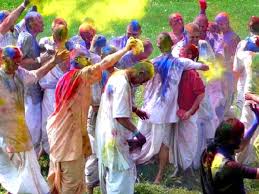
Holi ( The festival of Colours )is celebrated with enthusiasm and gaiety on the full moon day in the month of Phalgun which is the month of March as per the Gregorian calendar.
Holi festival may be celebrated with various names and people of different states might be following different traditions. But, what makes Holi so unique and special is the spirit of it which remains the same throughout the country and even across the globe, wherever it is celebrated.
 According to Hindu
mythology Holi has various legends associated with it. The foremost is the
legend of demon King Hiranyakashyap who demanded everybody in his
kingdom to worship him but his pious son, Prahlad became a devotee of
Lord Vishnu. Hiranyakashyap wanted his son to be killed. He asked his sister
Holika to enter a blazing fire with Prahlad in her lap as Holika had a boon
which made he immune to fire. Story goes that Prahlad was saved by lord himself
for his extreme devotion and evil minded Holika was burnt to ashes, for her
boon worked only when she entered the fire alone.
According to Hindu
mythology Holi has various legends associated with it. The foremost is the
legend of demon King Hiranyakashyap who demanded everybody in his
kingdom to worship him but his pious son, Prahlad became a devotee of
Lord Vishnu. Hiranyakashyap wanted his son to be killed. He asked his sister
Holika to enter a blazing fire with Prahlad in her lap as Holika had a boon
which made he immune to fire. Story goes that Prahlad was saved by lord himself
for his extreme devotion and evil minded Holika was burnt to ashes, for her
boon worked only when she entered the fire alone.
 On this day there
is a great excitement can be seen in people on the next day when
On this day there
is a great excitement can be seen in people on the next day when
 GANGAUR FESTIVAL
Gangaur is a festival celebrated in Rajasthan and some parts ofGujarat and Madhya
Pradesh.
The function of Dhinga Gavar starts after the sunset when the statues of Dhinga Gavar are put on the dias at 11 important locations in old Jodhpur city. Each statue is decorated in typical Rajasthani costume with gold jewelry of 5 KG to 30 KG. The offering to Dhinga Gavar are made of cannabis and dry fruits powder which is known as "MOI"
AKSHAYA TRITIYA FESTIVAL
Akshaya Tritiya:- Aksahy Tritiya is one of the most auspicious day is also known as "Akah Teej in Rajasthan. Is a Jain and Hindu holy day, that falls on the third Tithi (Lunar Day) of Bright half (Shukla Paksha) of the pan-Indian month of Vaishakha. The day of Akshaya Tritiya is worshipped and said to be auspicious in Jainsim because it is said to have established the very first "Ahar Charya" a methodology to prepare and serve food to Jain Monks. Its is an auspicious day for Hindus because is a birthday of Lord Parasurama who is the sixth incarnation of Lord Vishnu. On this day Veda Vyas and Lord Ganesha began to write Mahabharta.
Here, below are the festivals which are being shown in ascending order, according to the Hindu calender.
HOLI FESTIVAL
Holi ( The festival of Colours )is celebrated with enthusiasm and gaiety on the full moon day in the month of Phalgun which is the month of March as per the Gregorian calendar.
Holi festival may be celebrated with various names and people of different states might be following different traditions. But, what makes Holi so unique and special is the spirit of it which remains the same throughout the country and even across the globe, wherever it is celebrated.
First Day
Since that time,
people light a bonfire, called Holika on the eve of Holi festival and celebrate
the victory of good over evil and also the triumph of devotion to god.
Second Day
it is actually
the time for the play of colours. Shops and offices remain closed for the day
and people get all the time to get crazy and whacky. Bright colours of gulal
and abeer fill the air and people take turns in pouring colour water over each
other. Children take special delight in spraying colours on one another with
their pichkaris and throwing water balloons and passers by. Women and senior
citizen form groups called tolis and move in colonies - applying
colours and exchanging greetings. Songs, dance on the rhythm of dholak and
mouthwatering Holi delicacies are the other highlights of the day.
Gangaur is a festival celebrated in Rajasthan and some parts of
Gangaur is the
colourful and the one of the most important festivals of people of Rajasthan and
is observed throughout the state with great fervour and devotion by womenfolk
who worship Gauri, the consort of Goddess Paravati during the third lunar day of Shukla Paksha of the Hindu calaendar month of
Chaitra. In Gregorian
calendar, Gangaur festival is celebrated between
March–April. It is the celebration of spring, harvest and marital fidelity. Gana
is a synonym for Lord Shiva and
Gaur which stands for Gauri or Paravti who symbolizes
Saubhagya (marital bliss).
Lord Shiva and goddess Parvati are worshipped in this
festival of Gangaur. It is believed that after a temporary long sacrament
Gauri and Shiva reunited on this day. The small doll like Idols of the Shiva
and Gauri are made of wood. These divine male and female entities are called
‘Isar’ and ‘Gangaur’.
This festival is specifically meant for women folks The unmarried women worship her for being
blessed good husband, while married women do so for the welfare, health and
long life of their husbands and happy married life.


The function of Dhinga Gavar starts after the sunset when the statues of Dhinga Gavar are put on the dias at 11 important locations in old Jodhpur city. Each statue is decorated in typical Rajasthani costume with gold jewelry of 5 KG to 30 KG. The offering to Dhinga Gavar are made of cannabis and dry fruits powder which is known as "MOI"
The women of whom mostly are from Pushkarna Brahmin families dress up in fancy dress costume as various Hindu God and Hindu Goddess, police, saints, dacoit, tribal etc, and carry a stick in their hand. They patrol the narrow streets of Jodhpur
AKSHAYA TRITIYA FESTIVAL
Akshaya Tritiya:- Aksahy Tritiya is one of the most auspicious day is also known as "Akah Teej in Rajasthan. Is a Jain and Hindu holy day, that falls on the third Tithi (Lunar Day) of Bright half (Shukla Paksha) of the pan-Indian month of Vaishakha. The day of Akshaya Tritiya is worshipped and said to be auspicious in Jainsim because it is said to have established the very first "Ahar Charya" a methodology to prepare and serve food to Jain Monks. Its is an auspicious day for Hindus because is a birthday of Lord Parasurama who is the sixth incarnation of Lord Vishnu. On this day Veda Vyas and Lord Ganesha began to write Mahabharta.
The meaning of the word Akshaya is infinite that which never recede.
It is considered a
day for charity and new beginnings. Good deeds and offerings made on this day
never go to waste. It is believed that anything good
done on this day lasts forever and forever. People make special purchases on
this day, start new ventures, get married etc.
On this day in Rajasthan a special dish is made from wheat known as “Kheech”.
DIWALI FESTIVAL
 Diwali (also spelled Devali in certain regions) or Deepavali popularly known as the "festival of lights," is a five day festival which starts on Dhanteras, celebrated on thirteenth
lunar day of Krishna paksha (dark fortnight) of the Hindu calendar month Ashwin and ends on BhaiBeej celebrated on
second lunar day of Shukla paksha (bright fortnight) of the Hindu calendar
month of Kartik. In gregorian calendar, Diwali Festival is celebrated between mid-October and mid-November.
Diwali (also spelled Devali in certain regions) or Deepavali popularly known as the "festival of lights," is a five day festival which starts on Dhanteras, celebrated on thirteenth
lunar day of Krishna paksha (dark fortnight) of the Hindu calendar month Ashwin and ends on BhaiBeej celebrated on
second lunar day of Shukla paksha (bright fortnight) of the Hindu calendar
month of Kartik. In gregorian calendar, Diwali Festival is celebrated between mid-October and mid-November.
Diwali is an official holiday in India
For Hindus,
Diwali is one of the most important festivals of the year and is celebrated in
families by performing traditional activities together in their homes. For Jains, Diwali marks the
attainment of moksha or nirvana by Mahavira in 527 BC.
Diwali commemorates the return of Lord Rama along with Sita and Lakshmana, from his 14-year-long exile and
vanquishing the demon-king Ravana. In joyous celebration of the return of
their king, the people of Ayodhya the Capital of Rama, illuminated the
kingdom with earthen diyas and by bursting firecrackers.
The festival starts with Dhantera on which most Indian business
communities begin their financial year. The second day of the festival is Roop Chaturdashi is a Soundarya Siddhi Diwas
i.e. on this day one can perform some Sadhana for gain of beauty and magnetism.
Just as flowers and leaves cannot appear on a dry tree similarly a person who
is deprived of handsomeness, joy and vigor cannot rise in life. He remains
angry, tense and troubled throughout life. In life beauty and good looks are
just as importantas good health. the third day
of Diwali, marks the worship of Lakshmi,
the goddess of wealth in her most benevolent mood, fulfilling the wishes of her
devotees. The fourth day of Diwali, on this day people visit their near dear
ones home for wishing them “Happy Diwali”. The fifth day is referred to as Yama Dvitiya (also called Bhai Dooj), and on this day sisters
invite their brothers to their homes.
Regards,
Ritz.